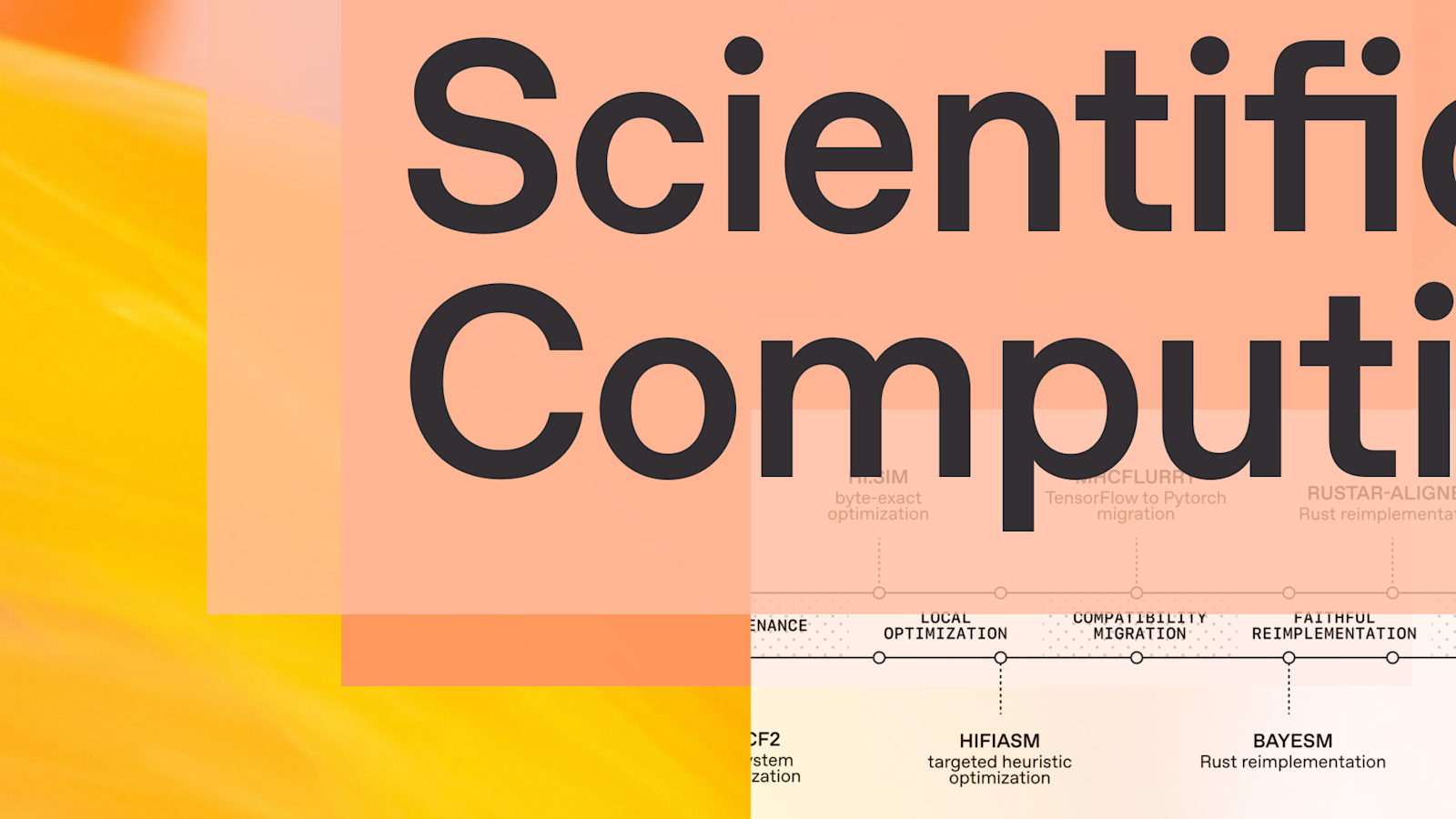
OpenAI has published a field report detailing how AI coding agents are being used to modernize scientific computing, accelerating software development and discovery. The report focuses on eight agent-assisted scientific computing projects, primarily within the life sciences, to illustrate how these tools are impacting research.
Scientific computing is a fundamental aspect of modern research, yet the software used to analyze scientific information often struggles to keep pace with data generation. Many research tools, initially developed by small academic teams, frequently lack robust packaging, testing, optimization, or long-term support, leading to fragile workflows and impeding discovery. AI agents are beginning to address these challenges by reducing engineering costs and handling implementation tasks.
Key Points
- The field report examines eight agent-assisted scientific computing projects.
- Five projects used Codex alone, while three used a combination of Codex and Claude Code.
- Projects ranged from routine maintenance and optimization to large-scale language migrations and GPU-native redesigns.
- Agents significantly accelerated software development and maintenance, enabling small teams to undertake work that would otherwise require more time or specialized support.
- Researchers' roles shifted from implementation to verification and orchestration, focusing on specifying, defining correctness, and deciding when to ship.
- Agents effectively handled specific, well-scoped requests but could not reliably judge scientific validity or meet expectations.
- Human reviewers needed to validate agent output using external references or measurable acceptance targets.
- Projects generally proceeded in stages with feedback-driven iterations, breaking down goals into smaller changes.
Context
According to OpenAI, the field report compiles case studies written by the teams behind each project, identifying recurring themes in agent-assisted scientific computing. The report highlights that AI agents can help researchers prototype ideas more quickly and pursue projects previously considered impractical. One example cited is the modernization of cyvcf2, a Python library for genomic data parsing, where GPT-5.5 replaced its legacy build and packaging system with a modern, unified process.
Why It Matters
This report indicates a shift in scientific software development, where AI agents can reduce engineering constraints and allow researchers to focus more on scientific direction and quality. Builders and researchers can observe how agentic assistance might accelerate project velocity, but also note the persistent need for human judgment in validating scientific output and ensuring long-term stewardship of tools.
What To Do
- Review the case studies in the field report to understand the range of applications for coding agents.
- Note the methods used for validating agent output, such as external references or measurable acceptance targets.
- Consider how to structure projects into feedback-driven iterations when incorporating agent assistance.
- Evaluate the implications for long-term software stewardship and attribution when using agents for development.
Keep Exploring
/atlas/claude-family /atlas/gpt-family /techniques/role-objective /techniques/output-schema /techniques/multishot