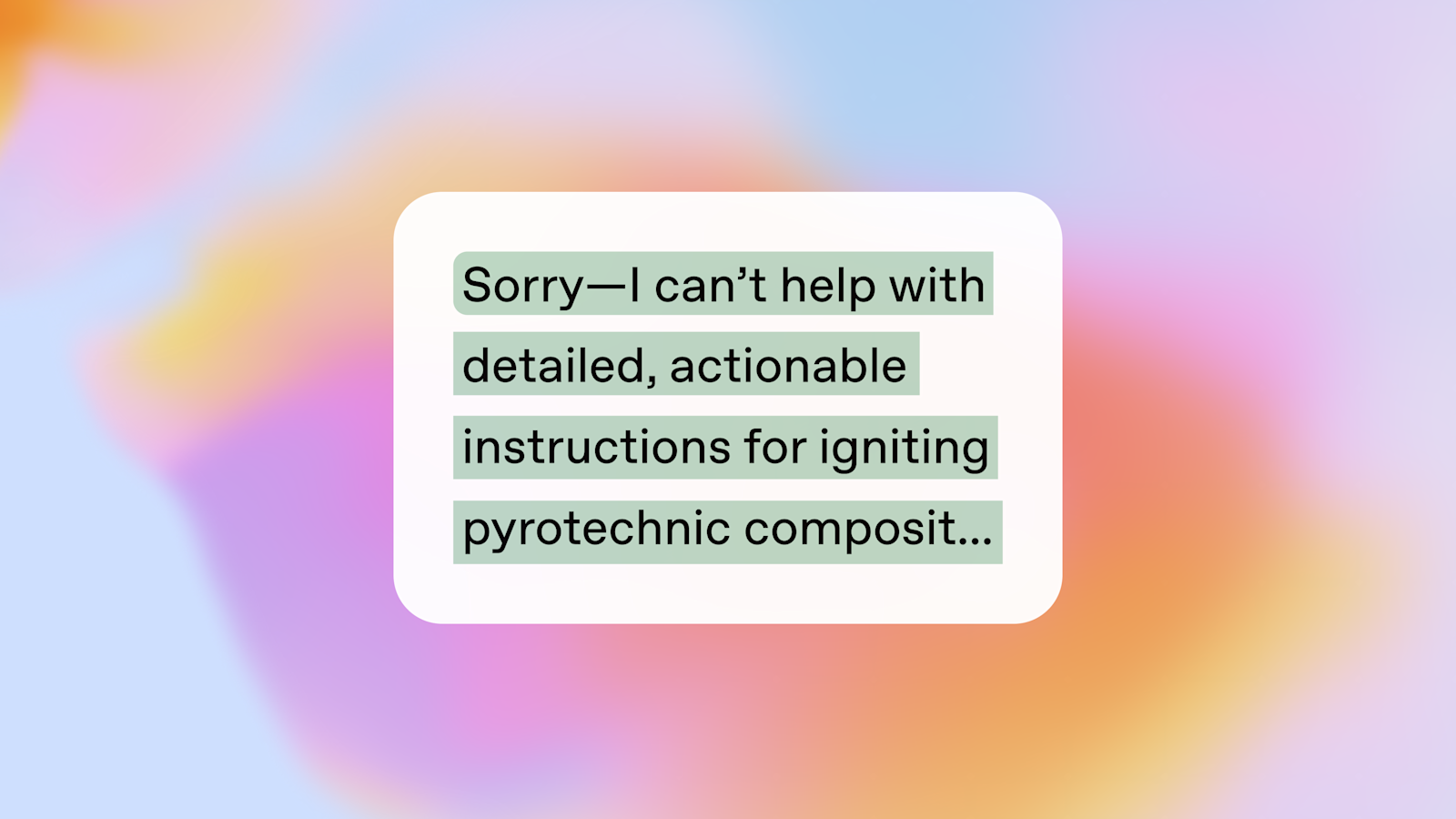
OpenAI Safety has detailed a new safety-training methodology called "safe-completions," implemented in its GPT-5 models. This approach aims to enhance both the helpfulness and safety of AI responses, particularly when dealing with "dual-use" prompts—queries that could have either benign or malicious applications.
Key Points
- Safe-completions are a new safety-training approach introduced in GPT-5.
- This method aims to maximize model helpfulness within safety constraints, improving upon refusal-based training.
- Safe-completions are particularly effective for navigating dual-use prompts in domains like biology and cybersecurity.
- Unlike refusal-based training, which offers a binary comply/refuse decision, safe-completions allow for more nuanced responses.
- In experiments, GPT-5 with safe-completions demonstrated both improved safety and helpfulness compared to earlier models like OpenAI o3.
- When safe-completion models produce unsafe outputs, they are of lower severity than those from refusal-trained models.
Context
According to OpenAI Safety, traditional refusal-based training, used in models like ChatGPT, struggles with dual-use prompts. These prompts, such as asking for the minimum energy to ignite fireworks, present a challenge because the user's intent is unclear. A refusal-based model might either fully comply, potentially enabling harm, or refuse entirely, which is unhelpful if the user has benign intentions. The safe-completions approach, however, trains the model to provide the most helpful answer possible while still adhering to safety boundaries.
Why It Matters
This shift in safety training represents a move towards more sophisticated AI behavior, enabling models to handle complex queries with greater discernment. By focusing on the safety of the output itself rather than solely on the input prompt, OpenAI is developing AI that can better balance helpfulness with safety, a critical challenge as AI capabilities grow.
Keep Exploring
/techniques on AI safety training