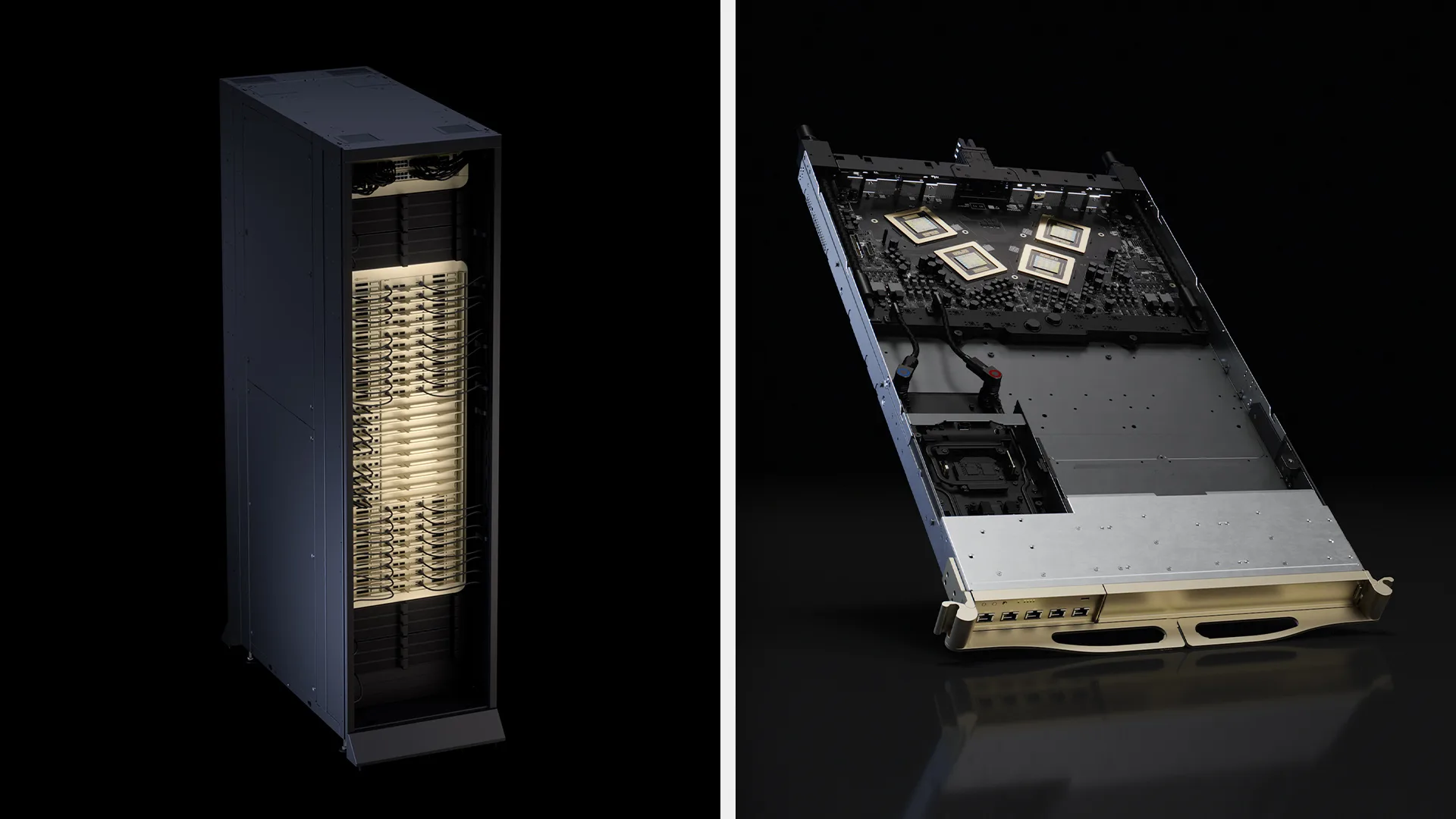
NVIDIA has detailed how its NVLink 6 technology provides multi-layer resiliency for AI factories, as described in a recent NVIDIA Developer Blog post. This framework is designed to ensure continuous operation and maximize productivity in large-scale AI training and inference environments.
Key Points
- NVLink 6 combines Forward Error Correction (FEC), Physical Layer Retry (PLR), and Universal Physical Layer (UPHY) recovery for signal error correction at the silicon level.
- Credit-based flow control (CBFC) is used to eliminate packet loss at the Link Layer, contributing to predictable low latency.
- The NMX Controller employs a "contain and drain" state with NMX High Availability to isolate faults and migrate control functions within seconds.
- Shadow Engine Recovery in NVIDIA Dynamo uses a pre-warmed replica process to restore inference capacity in 7.3 seconds on B200 GPUs, compared to 283 seconds for a cold restart.
- A NCCL prototype supports cuda-checkpoint for multi-node checkpoints, with general availability anticipated by the end of the year.
- NVLink Fusion extends this multi-layer resiliency stack to custom XPUs, allowing third-party silicon to integrate with the NVLink scale-up fabric.
- The NVIDIA Vera Rubin Platform is a full-stack AI factory platform, with Vera Rubin NVL72 connecting 72 Rubin GPUs into a single scale-up domain using NVLink 6.
Context
According to NVIDIA, the network infrastructure for AI models must scale to meet growing demands, but massive deployments are prone to transient errors, link degradations, and node interruptions. To maintain optimal cluster utilization, the network must ensure uninterrupted progress for tightly coupled workloads. A truly lossless fabric is presented as a prerequisite for production AI infrastructure.
NVLink 6 addresses these challenges through a multi-layered stack spanning hardware, system design, and software. At the physical and link layers, it enforces a natively lossless fabric by combining FEC, PLR, and UPHY recovery for rapid error correction and link stability. It also uses CBFC to eliminate packet drops and active error containment to isolate faults. The architecture is designed with redundant switch trays, distributed NMX Controllers, and dual out-of-band management paths to avoid single points of failure. At the application and software layers, features like Dynamo Shadow Engine Recovery and application-level checkpoint and restore mechanisms are implemented to protect running workloads.
Why It Matters
For builders and operators of large-scale AI factories, the continuous output and uptime of AI infrastructure directly impact productivity and revenue. The multi-layer resiliency approach of NVLink 6 aims to mitigate the impact of hardware anomalies and transient errors, which are inevitable in massive deployments, thereby improving the reliability and efficiency of AI training and inference at scale.
What To Do
- Review the NVIDIA Developer Blog post for details on the NVLink 6 multi-layer resiliency stack.
- Explore the NVIDIA Vera Rubin Platform to understand its role as a full-stack AI factory infrastructure.
- Note the performance figures for Shadow Engine Recovery on B200 GPUs to understand potential recovery times.
- Watch for the general availability of NCCL prototype support for cuda-checkpoint by the end of the year.
Keep Exploring
/atlas/image-models /techniques/multimodal-grounding /studio?pack=foundation