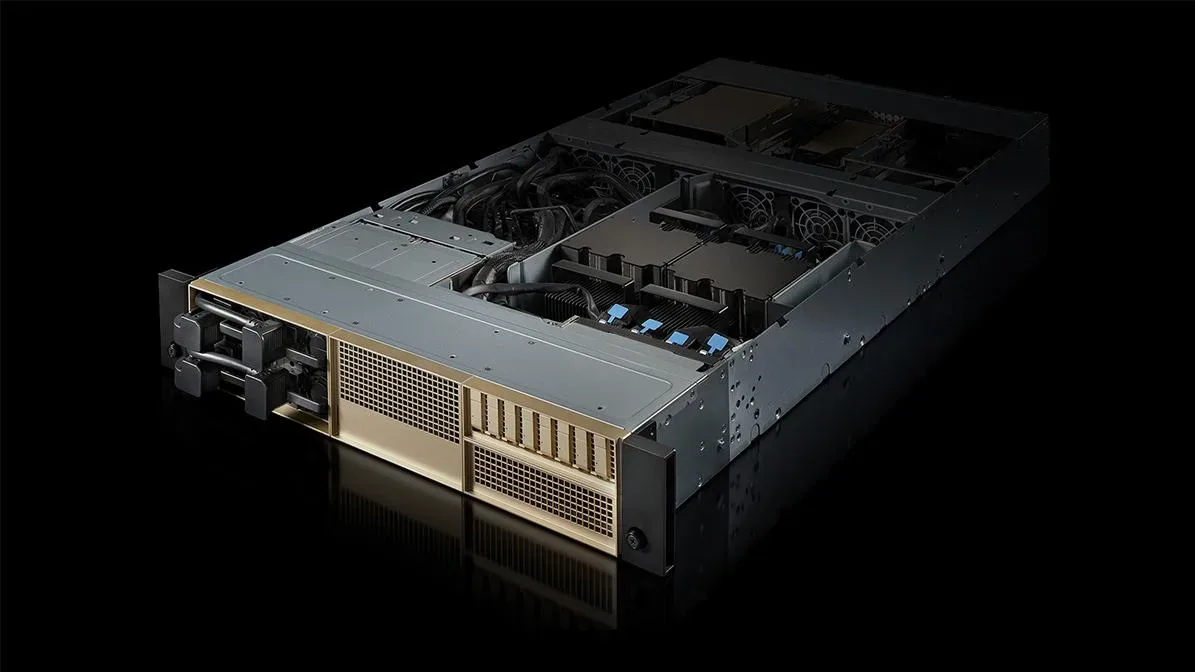
The NVIDIA Vera CPU is engineered to manage the variable and unpredictable nature of agentic AI workloads, a challenge for traditional multi-design CPU fleet strategies. NVIDIA states that Vera CPU aims to deliver strong per-thread performance for latency-bound sequential paths and high concurrency for transient fan-out bursts. Internal testing in July 2026 demonstrated that the NVIDIA Vera CPU achieved up to 1.5x the per-core agentic workload performance compared to the latest AMD Venice CPUs.
Key Points
- NVIDIA Vera CPU is architected to deliver both strong per-thread performance and high concurrency.
- Telemetry from over 163,000 agentic sessions showed that more than 97% exhibited unique workload profiles.
- This variability makes traditional multi-design CPU fleet strategies impractical for AI factories.
- Internal testing in July 2026 demonstrated the NVIDIA Vera CPU achieved up to 1.5x the per-core agentic workload performance of the latest AMD Venice CPUs.
- The Vera CPU's performance is attributed to its monolithic architecture, wide front end, deep out-of-order execution, and high-bandwidth memory subsystem.
- The optimization target for an agentic CPU fleet is the total number of completed user sessions, not raw core count.
Context
According to the NVIDIA Developer Blog, AI factories are interconnected systems where fleet economics depend on efficiently converting power and capital into completed agent tasks. While GPUs handle model execution, CPUs manage orchestration, tool execution, and sandboxed computation. Agentic workloads are characterized by unpredictable and highly variable runtime profiles, unlike conventional computing.
Why It Matters
This development from NVIDIA indicates a focus on optimizing the underlying hardware infrastructure for agentic AI, which could lead to more efficient and cost-effective operation of AI factories. Builders and practitioners may see improved performance and resource utilization for complex AI workflows.
What To Do
- Note the NVIDIA Vera CPU's architectural features, including its wide front end and high-bandwidth memory subsystem.
- Consider the implications of optimizing for completed user sessions rather than raw core count in agentic fleet design.
- Watch for further performance benchmarks and availability details for the NVIDIA Vera CPU.
- Compare the stated performance gains against current CPU solutions in your AI factory deployments.